
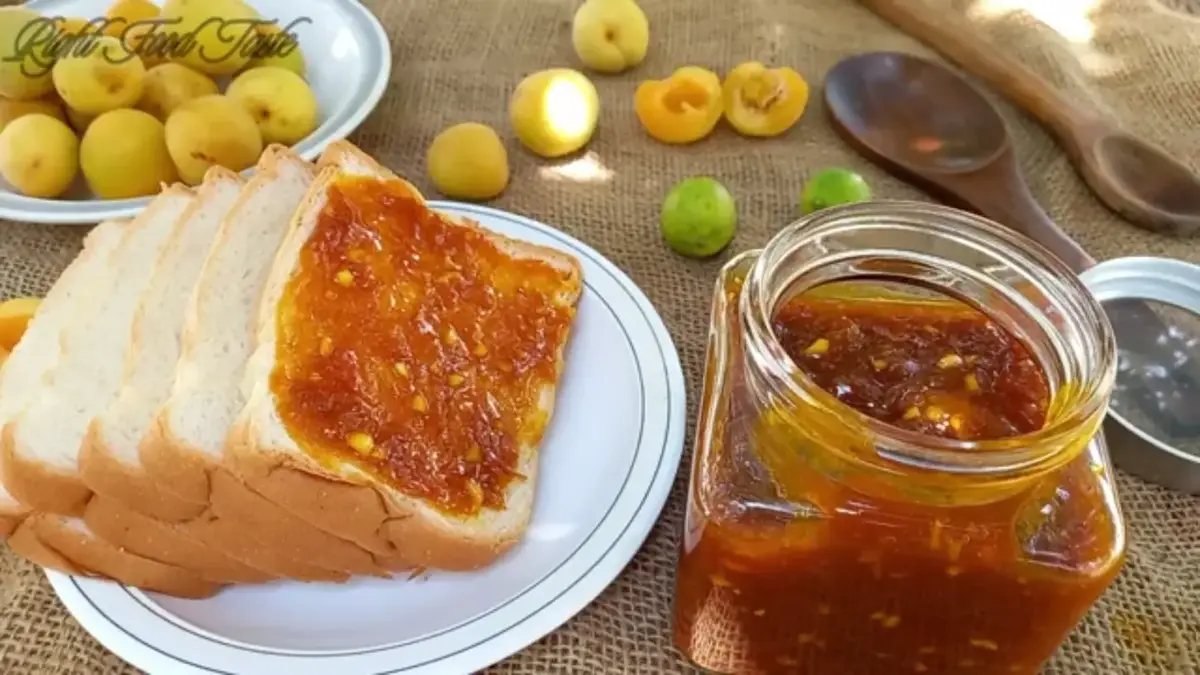
Apricot jam is a bright, fruity homemade preserve made with fresh apricots, sugar, and lemon juice—no added pectin needed. As the apricots cook down, the mixture naturally thickens into a glossy jam with a sweet, lightly tangy flavor that’s perfect for toast, biscuits, and desserts.
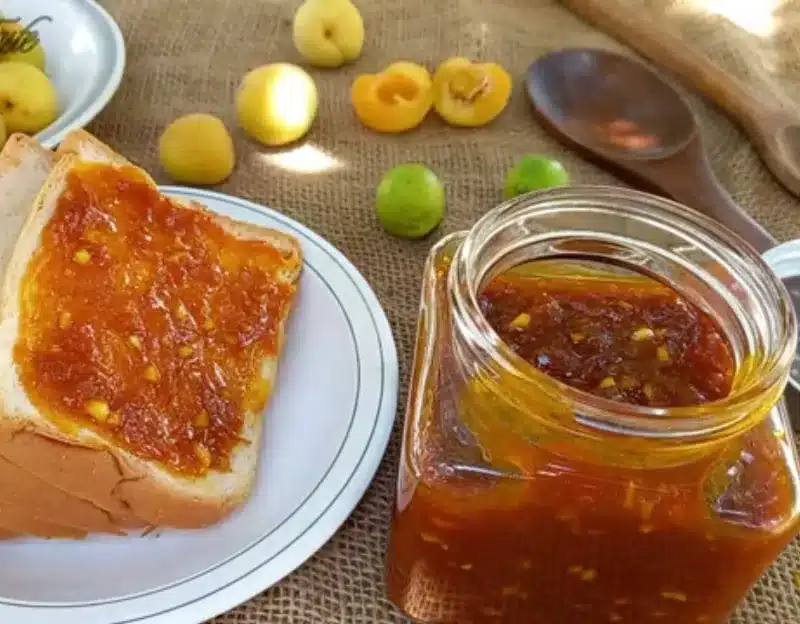
Apricot Jam Recipe
Ingredients
Method
- Begin by washing the apricots thoroughly. We will use apricots with their skin.

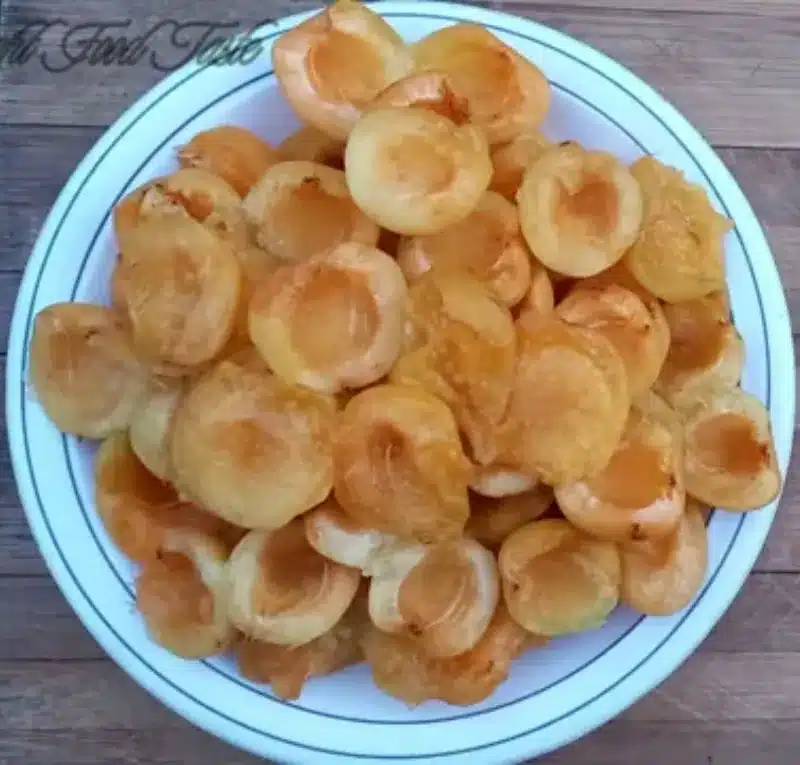
- Cut them in half and remove the pits.

- Now put the apricots into a large pot or a wok. Cook the apricots on medium-low flame. Stir for 2 to 3 minutes while pressing and chopping the apricots into small pieces with the spoon.

- Next, add sugar. Stir well to combine. Simmer the mixture on medium-low flame for 12 to 13 minutes. Stirring occasionally until the sugar dissolves and the apricots have released their juices.

- Now add freshly squeezed lemon juice. Stir it to combine and continue simmering for 8 to 10 minutes more, stirring occasionally. Be sure to keep an eye on the pot to prevent the mixture from burning.

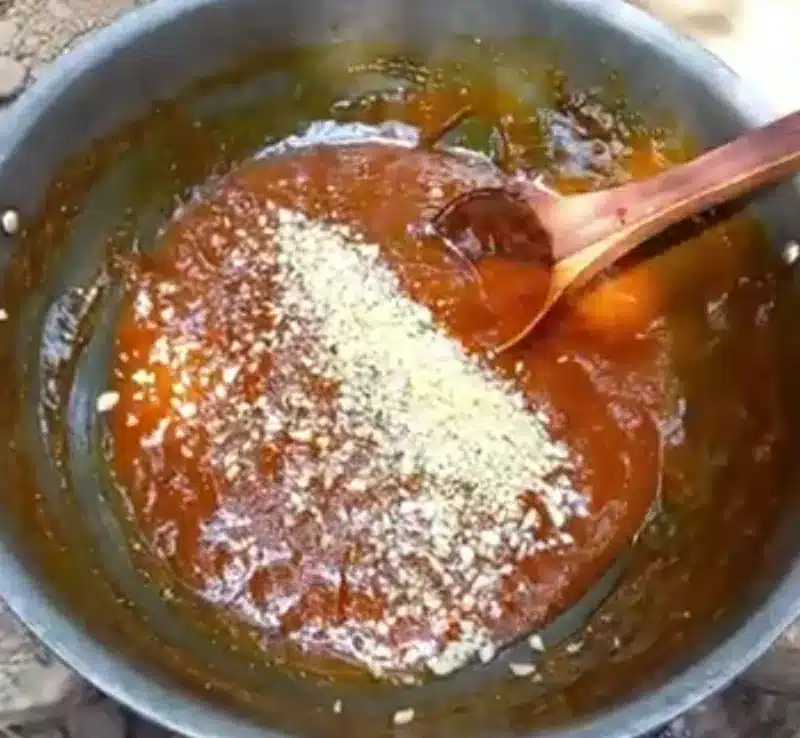
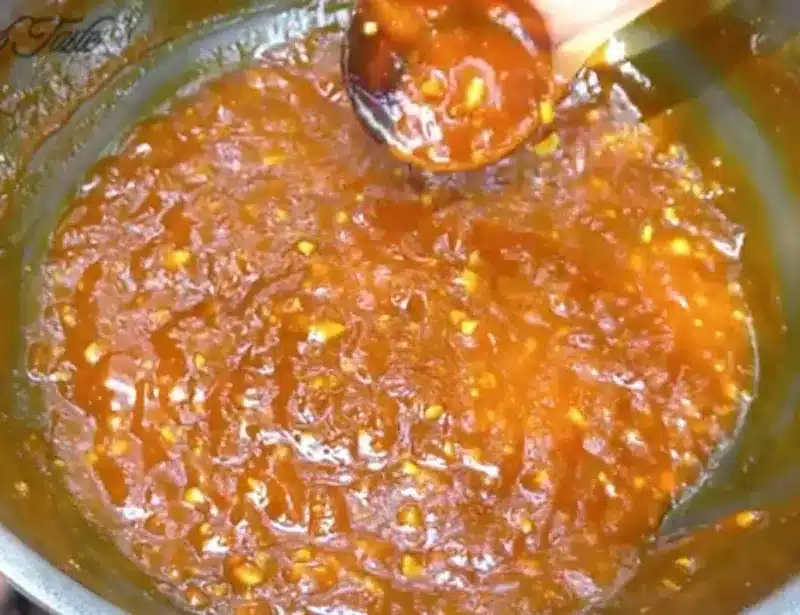
- Next, add chopped almonds. Almonds give a nutty flavor and crunchy texture to the jam but if you don’t like you can skip it.Add almonds two minutes before reaching the desired consistency. Cook the jam for 2 minutes after adding the almonds.

- After about 25-30 minutes, the mixture should have thickened and reached the desired consistency, and it coats the back of a spoon. To test if it's ready, you can use the "wrinkle test."

- Turn off the flame and remove the pot from the heat and let it cool for a few minutes. Skim any foam off the top of the mixture, then transfer it to sterilized jars.

- Be sure to leave a little bit of space at the top of each jar. Seal the jars tightly and let them cool to room temperature. Once cooled, store the jars in the refrigerator for up to several months.

- Enjoy your homemade jam on your favorite bread or as a topping for ice cream or yogurt. You can also enjoy your jam on toast, scones, or as a sweet glaze for meats. Give this recipe a try and let us know what you think!








Video
Nutrition (Approx. per 1 tbsp / 20g)
- Calories: 44
- Carbs: 11g (Sugars: 10g, Fiber: 0.2g)
- Fat: 0g (Sat Fat: 0g)
- Protein: 0.1g
- Sodium: 0mg • Cholesterol: 0mg
- Vitamin A: 55 IU • Vitamin C: 0.6mg
- Calcium: 1mg • Iron: 0.1mg
Nutrition values are estimates and may vary depending on ingredients and portion size.
For safe storage and shelf life, see How to Sterilize Jars for Jam & Store Preserves Safely.
Why This Apricot Jam Works Without Pectin
Apricots contain natural pectin. When cooked with sugar and a little acidity (lemon juice), the jam thickens and sets naturally. Lemon juice also balances sweetness and supports a better final texture.
Ingredients Overview (Quick Notes)
- Apricots: Choose ripe, fragrant apricots with no bruising. A slightly firm texture is ideal for strong flavors.
- Sugar: Needed for classic jam texture and keeping quality. Reducing too much may affect the thickness and shelf life.
- Lemon juice: Adds brightness and helps the jam set properly.
- Optional add-ins: Almonds for texture, or small flavor additions like vanilla, ginger, cinnamon, or orange zest.
How to Choose Apricots for the Best Jam
- Look for bright orange-yellow apricots with a sweet aroma
- They should feel slightly soft, not mushy
- In-season apricots give the best flavor and color
How to Know When Apricot Jam Is Ready
Jam continues to thicken as it cools, so avoid cooking until it looks overly stiff in the pot. For the most reliable doneness checks (including the wrinkle test, spoon/shearing test, and temperature guidance), follow this guide:
How to Know When Jam Is Set (Wrinkle Test, Spoon Test, Temperature)
Sterilizing Jars and Preventing Contamination
Good jar hygiene helps prevent spoilage and off flavors.
- Use clean, sterilized jars and lids
- Fill and seal as directed in your recipe card
- Let jars cool undisturbed
- Always use a dry spoon to avoid introducing moisture
Discard the jam if you notice mold, unusual bubbling, or an off smell.
Storage & Shelf Life (Practical Guidance)
- Refrigerator method: Store in the fridge and use within a few weeks for best quality.
- After opening: Keep refrigerated and use within about a month.
- Sealed jars: If properly sealed and stored in a cool, dark place, it lasts longer—but always check smell and appearance before use.
Serving Ideas
Use apricot jam:
- On toast, biscuits, scones, paratha, or chapati
- Swirled into yogurt or oatmeal
- As a pastry or cookie filling
- As a quick glaze for roasted chicken or lamb (loosen with a little warm water/lemon juice)
Optional Variations (Choose One Per Batch)
- Vanilla: Stir in near the end
- Ginger: Add a small amount for warmth
- Cinnamon: Add a pinch
- Almond: Add chopped almonds for texture
FAQs
How do I prevent homemade apricot jam from spoiling?
Use sterilized jars and lids, seal properly, refrigerate after opening, and always use a dry spoon. If the jam shows mold, off smell, or unusual bubbling, discard it.
Is apricot jam vegan?
Homemade apricot jam made with apricots, sugar, and lemon juice is typically vegan. If using store-bought ingredients, check for non-vegan additives.