
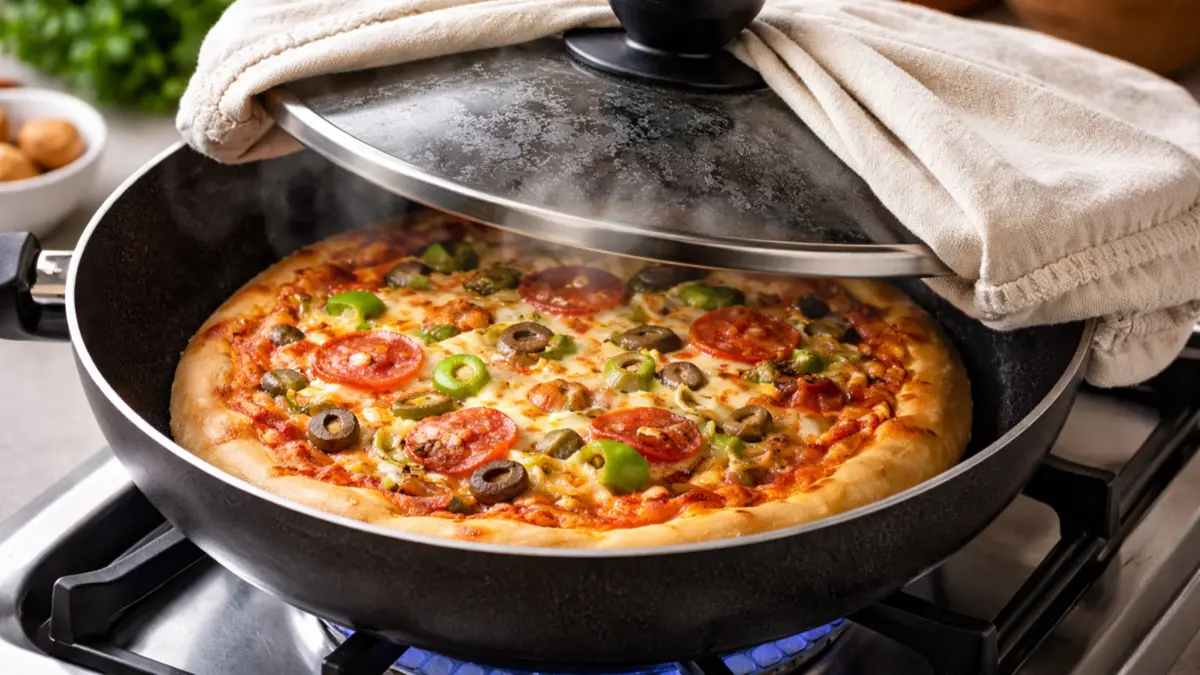
Learning how to bake pizza in a pan without an oven is easy when you understand heat control, spacing, and steam management. Baking pizza without an oven is not a compromise — it’s a practical cooking technique that works beautifully when done correctly. Whether you don’t own an oven or simply enjoy stovetop cooking, a pan or wok can deliver a soft base, fully cooked toppings, and perfectly melted cheese.
This guide explains how pan-baked pizza works, the essential heat-control techniques, and the exact setup needed to create an oven-like environment on your stovetop.
How Pan-Baking Pizza Works
An oven bakes pizza using enclosed, circulating heat. When baking on a stovetop, we recreate this environment by:
- Using a heavy-bottom pan or wok
- Baking on low-medium, steady heat
- Trapping heat and steam inside the pan
- Preventing moisture from dripping back onto the pizza
When these conditions are met, pizza cooks evenly from bottom to top — even without an oven.
Equipment Needed for Pan-Baked Pizza
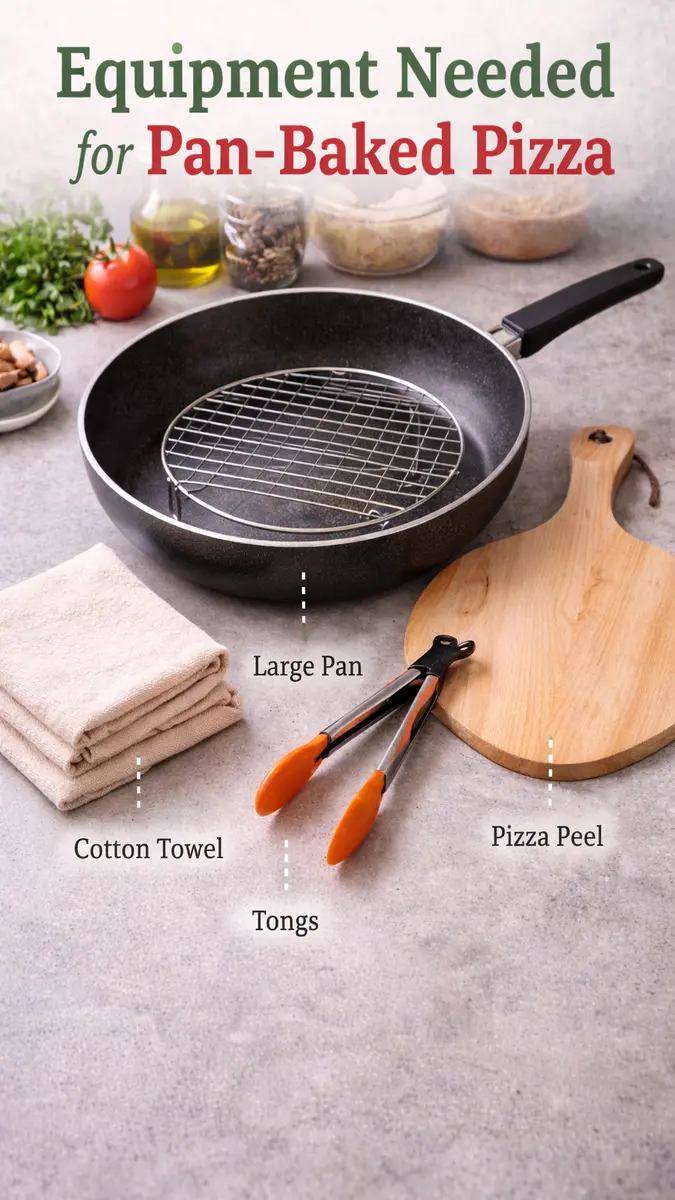
You don’t need special tools. A basic home setup works well.
You’ll need:
- A heavy-bottom frying pan, wok, or pot
- A tight-fitting lid
- A spacer (metal rack, inverted bowl, clean stones, or tawa)
- A thick cotton cloth
- Gas stovetop (best for heat control)
- Tongs or heatproof gloves
The pan should be wide enough to hold the pizza dish without touching the sides.
Step-by-Step: How to Bake Pizza in a Pan or Wok
1. Preheat the Pan Properly
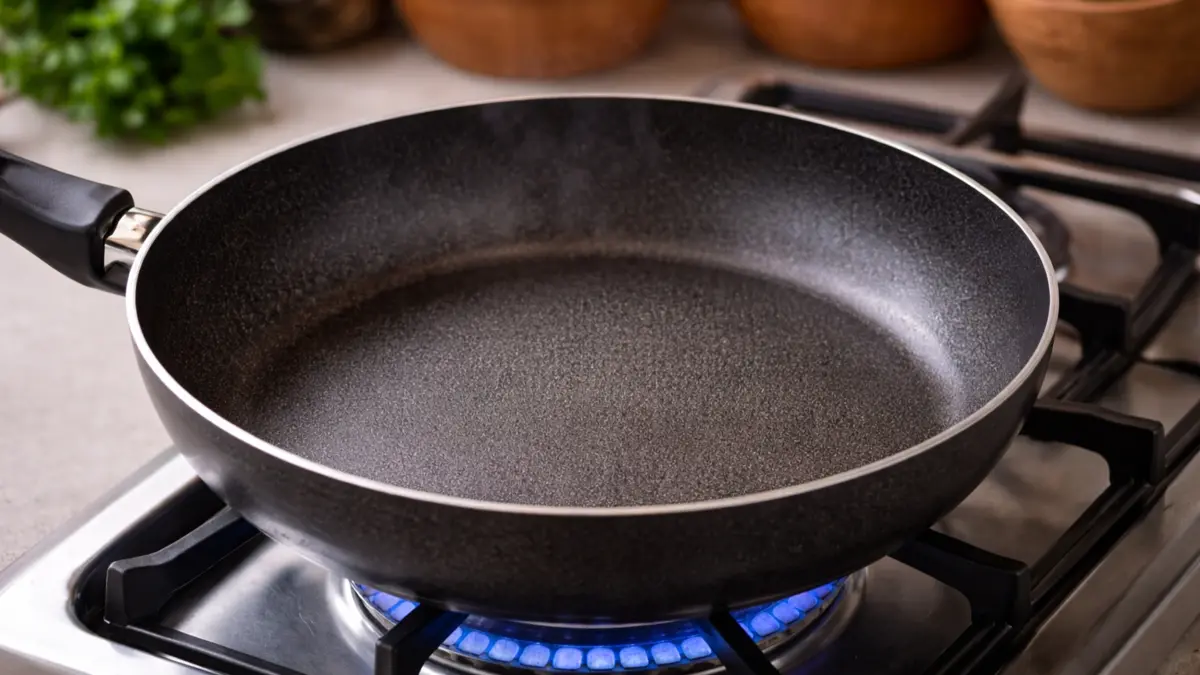
Place your empty pan or wok on medium heat and preheat it for 2–3 minutes.
Preheating ensures:
- The base starts cooking immediately
- The pizza doesn’t turn soggy
- Heat is evenly distributed
Once preheated, reduce the flame to low-medium before baking.
2. Use a Spacer to Prevent Direct Heat
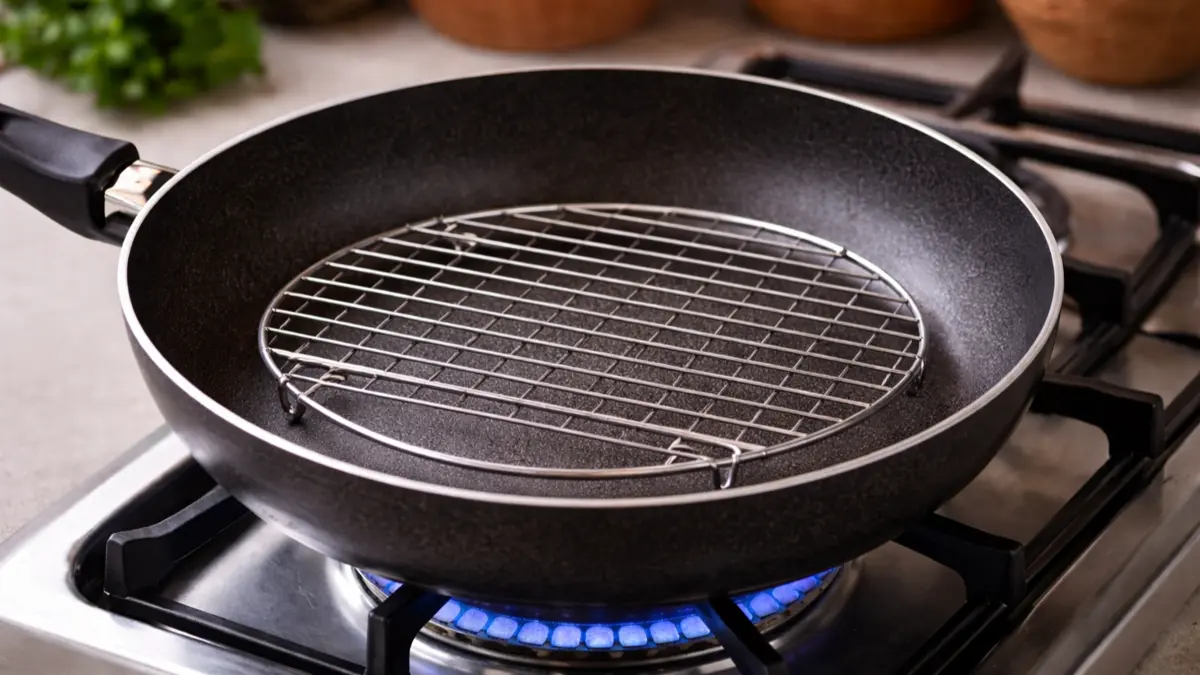
Never place the pizza dish directly on the pan’s base.
Instead:
- Place a metal stand, steaming rack, inverted bowl, or clean stones inside the pan
- The spacer lifts the pizza and prevents burning
- It allows hot air to circulate underneath
This step is essential for even baking.
3. Prepare the Pizza Base
- Stretch the dough evenly
- Prick the base with a fork (except edges) to prevent air bubbles
- Lightly oil the edges to keep them soft
- Add sauce, toppings, and cheese
Let the assembled pizza rest for 10 minutes before baking.
For a soft and well-risen base, start with my best pizza dough recipe, which works perfectly for pan-baked pizzas. If you want detailed steps on shaping and preparing the base, then see my pizza crust recipe, which is designed specifically for stovetop baking.
The Key Technique: Covering the Lid with a Cotton Cloth
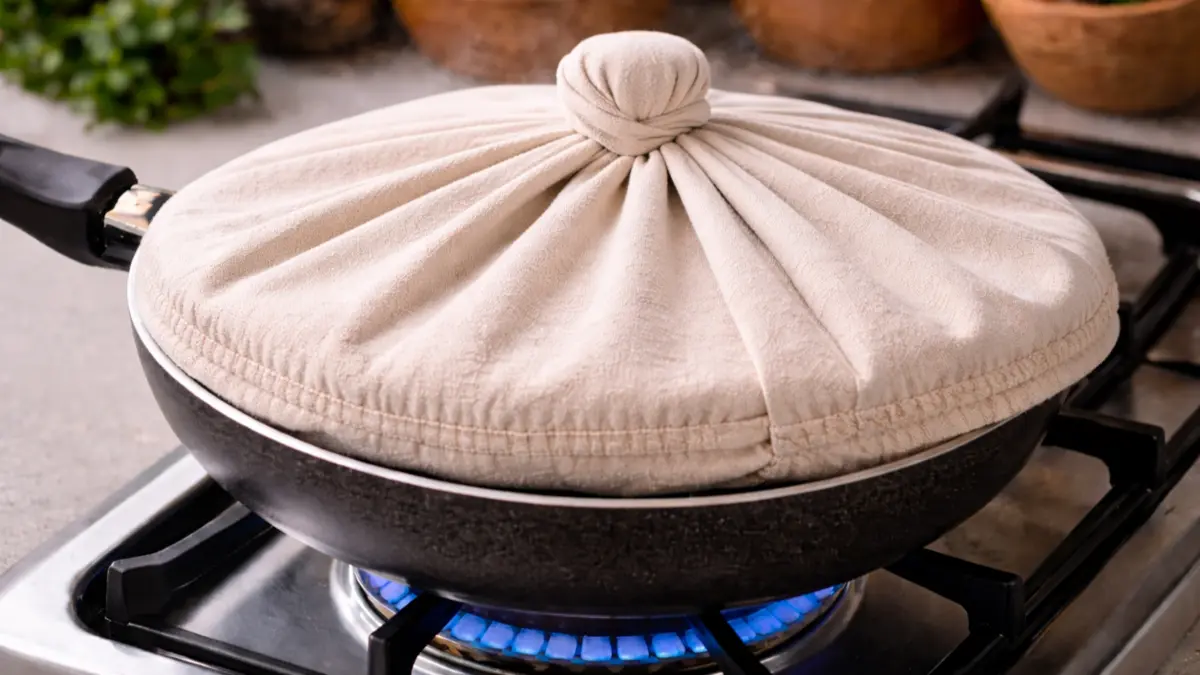
Why This Technique Matters
When baking pizza in a pan, steam naturally forms inside. If not controlled, condensation builds on the lid and drips back onto the pizza, making the base soggy and the toppings watery.
Covering the lid with a thick cotton cloth solves this problem.
How the Cloth-Covered Lid Works
- Absorbs excess steam
- Prevents water droplets from falling onto the pizza
- Maintains consistent internal heat
- Creates a dry, oven-like environment
This technique is especially important for:
- Cheese-heavy pizzas
- Creamy or saucy toppings
- Thick pizza bases
How to Use the Cloth-Covered Lid Safely
- Take a clean, thick cotton cloth
- Wrap it tightly around the inside or underside of the lid
- Secure it so it stays in place
- Ensure the cloth does not hang outside the lid
- Keep the flame low at all times
⚠️ Safety Note:
Never allow the cloth to touch the burner or extend beyond the lid’s edge.
Baking the Pizza
- Carefully place the pizza dish on the spacer using tongs or gloves. The pan will be extremely hot.
- Cover the pan with the cloth-wrapped lid
- Bake on low-medium flame for 15–20 minutes
- Avoid opening the lid frequently
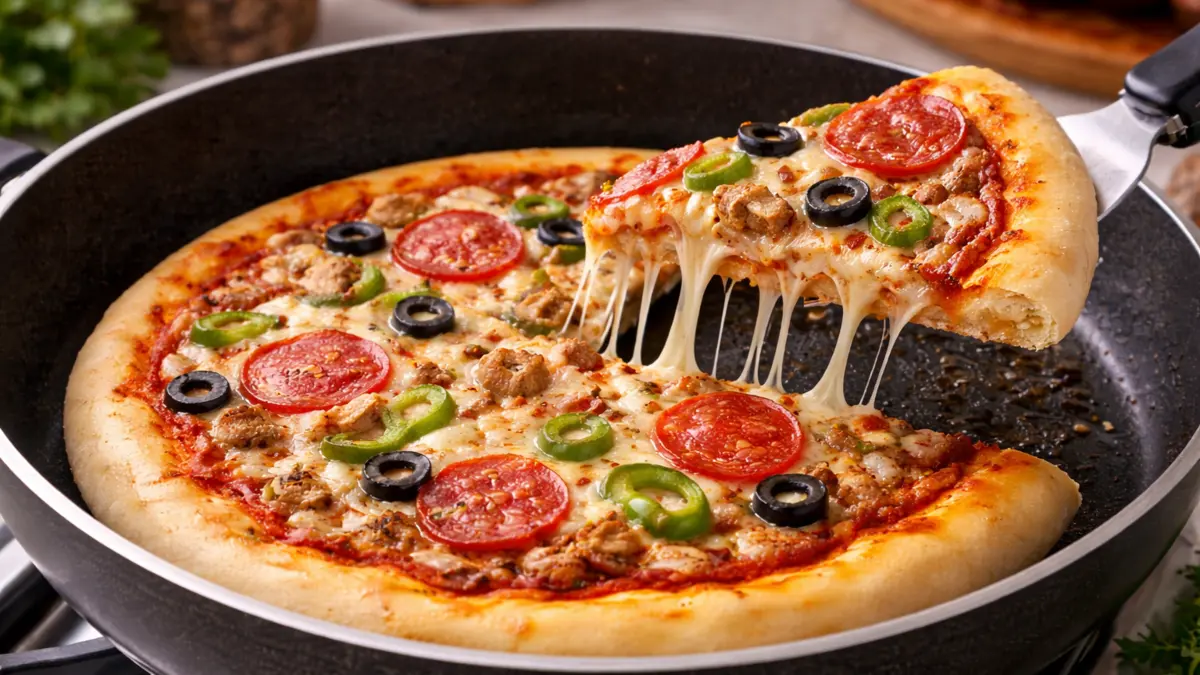
The pizza is ready when:
- Cheese is fully melted
- The base is cooked and firm
- Edges are soft and lightly golden
Turn off the heat and remove carefully.
Optional Heat-Control Techniques
Using a Tawa Under the Pan
If your pan has a thin base:
- Place a tawa under it. It will serve as a heat diffuser.
- This diffuses heat and prevents burning
Why Bake Pizza in a Pan Instead of an Oven?
Not every kitchen has an oven, and in many regions, stovetop cooking is more common and accessible. Baking pizza in a pan or wok allows you to:
- Make pizza without special equipment
- Control heat easily on a gas or electric stove
- Achieve a soft crust with evenly cooked toppings
- Cook pizza anywhere, even in small kitchens
A heavy pan with a tight lid traps heat from all sides, creating an enclosed environment similar to an oven.
Can This Method Be Used in an Oven?
Yes — but adjustments are needed.
If baking the same pizza in an oven:
- Preheat oven to 220°C / 430°F
- Bake directly on a rack or pizza stone
- Skip the cloth-covered lid technique
- Bake for 10–12 minutes, depending on thickness
Common Mistakes to Avoid
- Skipping preheating
- Placing pizza directly on the pan base
- Using too much sauce or wet toppings
- Opening the lid repeatedly (heat escapes)
- Cooking on very high heat throughout
How to Adjust for Different Pizza Types
Thin Crust Pizza
- Bake slightly shorter
- Use moderate toppings
- Dock the base lightly
Thick or Loaded Pizza
- Bake a little longer
- Reduce the heat slightly after 10 minutes
- Ensure toppings are pre-cooked (especially meats)
Safety Tips When Baking Pizza in a Pan
- Always use tongs or heatproof gloves
- Keep children away from the stove
- Let the pan cool before washing
- Never add water to a hot, empty pan
Can You Use This Method for Other Recipes?
Yes. Pan baking works well for:
- Creamy chicken pizza
- Vegetable pizza
- Cheese-loaded pizzas
- Mince or keema pizza
- Flatbreads
- Stuffed breads
- Thick or thin crust bases
Once you master the technique, it becomes a versatile stovetop baking method.
Related Recipes You Can Try
- This pan-baking method works especially well for cheese-heavy pizzas like my creamy chicken pizza, where even heat and trapped steam help melt the toppings perfectly.
- For a spicy, protein-rich option, try this method with my chicken mince pizza, which is cooked entirely in a pan without an oven.
Final Thoughts
Baking pizza in a pan or wok is a reliable, flexible technique when heat and moisture are controlled properly. Using a spacer, baking on a low-medium flame, and covering the lid with a cotton cloth together creates an oven-like environment — without special equipment.