
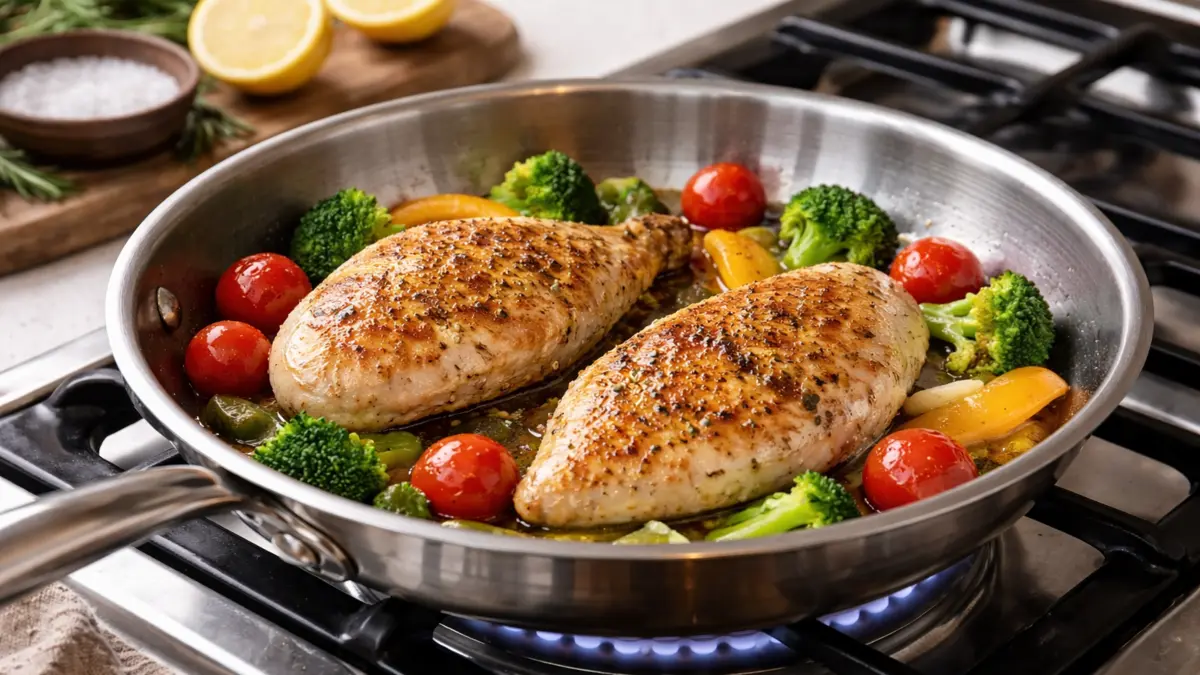
If you’re struggling to prevent food from sticking to stainless steel pans, you’re not alone. Many home cooks love stainless steel cookware for its durability and clean look, but sticky food and burnt residue can quickly turn cooking into frustration. The good news? Stainless steel doesn’t have to stick — it just requires the right technique.
Learning how to cook properly in stainless steel pans can completely change your kitchen experience. From mastering the water drop test to controlling heat and using oil correctly, small adjustments make a big difference. In this guide, you’ll discover simple, practical methods to stop food from sticking and achieve a perfect golden sear every time.
Why Food Sticks to Stainless Steel Pans (And How to Prevent It)
Food sticks to stainless steel pans mainly because of improper heat control and incorrect oil timing. Unlike nonstick cookware, stainless steel relies on temperature and technique to create a natural release.
When a pan is too cold, food bonds directly to the metal surface. When it’s overheated, proteins seize instantly and stick. The key to preventing sticking is understanding how stainless steel reacts to heat.
Here’s what actually prevents food from sticking:
- Proper preheating
- Adding oil at the correct time
- Drying food before cooking
- Allowing natural release before flipping
Once you master these fundamentals, stainless steel pans become one of the best tools for achieving a perfect golden sear without sticking.
1. Preheat the Pan Properly (The Most Important Step)
Preheating is the #1 reason food sticks.
How to Preheat Correctly
- Place the pan on medium heat.
- Allow it to heat gradually (do not rush with high heat).
- Test the temperature using the water drop test.
Use the Water Drop Test
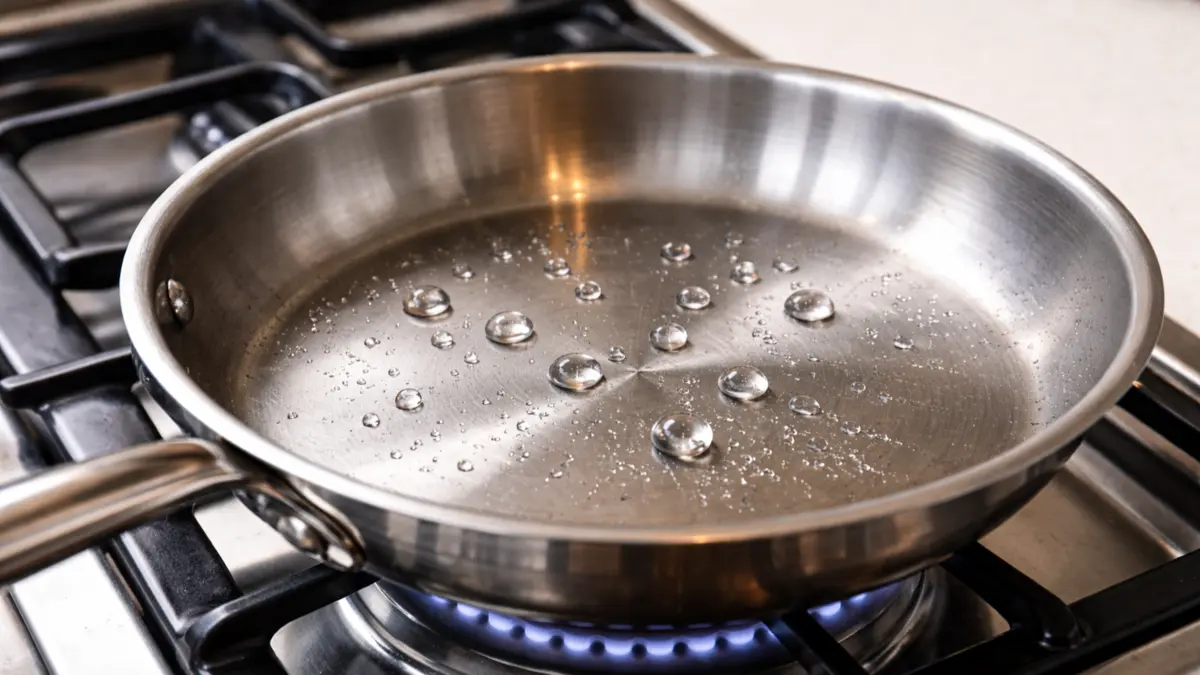
Sprinkle a few drops of water into the pan.
- If they sit flat or water sizzles and evaporates immediately → pan is not hot enough.
- If water splits into tiny droplets → almost ready
- If they bead up and glide across the surface like mercury, the pan is ready → perfect temperature
This indicates the pan is ready for oil.
2. Add the Right Oil at the Right Time
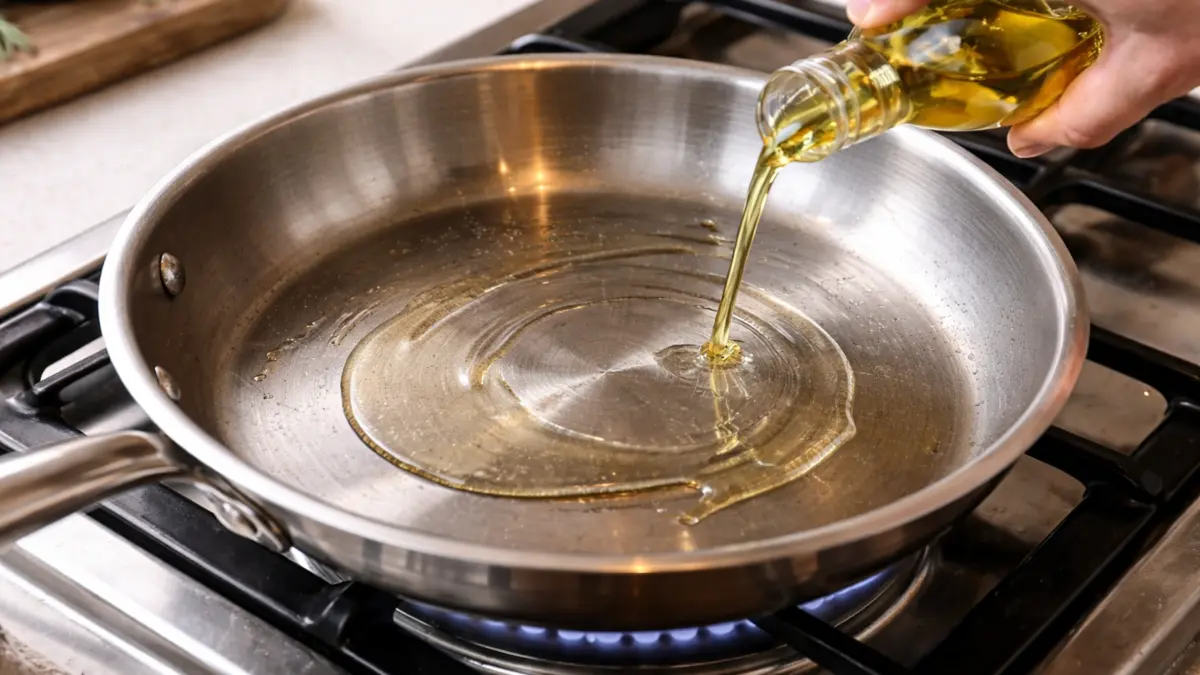
After the pan is properly heated:
- Add oil only after preheating
- Swirl to coat the surface evenly
- Allow the oil to heat for 10–15 seconds before adding food
This technique works particularly well when cooking toppings such as seasoned chicken mince for homemade pan-baked pizzas.
Best Oils for Stainless Steel
Choose oils with high smoke points:
- Canola oil
- Vegetable oil
- Peanut oil
- Avocado oil
Avoid low smoke-point oils (like extra virgin olive oil) for high-heat cooking — they burn and cause sticking.
3. Prepare the Food Properly
Pat Food Dry
Moisture is the enemy of searing.
- Use paper towels to dry meat, fish, and vegetables
- Excess moisture creates steam and causes sticking
Coat Delicate Foods Lightly
For fish or thin vegetables:
- Lightly dust with flour or cornstarch
- This creates a protective barrier
Marinate Smartly
Marinating helps prevent sticking by creating a moisture layer.
However:
- Remove excess marinade before cooking
- Too much liquid will steam instead of sear
4. Use Proper Cooking Techniques
Maintain Consistent Heat
Stainless steel holds heat well.
- Cook at medium to medium-high heat
- Avoid constantly adjusting the flame
- Lower the heat slightly if the food begins sticking
Sudden temperature changes cause sticking.
If you regularly cook stovetop dishes like pizza, you may also find our guide on how to bake pizza in a pan or wok without an oven helpful for mastering heat control and steam management.
Use the Right Amount of Oil
Too little oil → sticking
Too much oil → greasy food
Aim for a thin, even coating — not a pool.
Don’t Move the Food Too Early
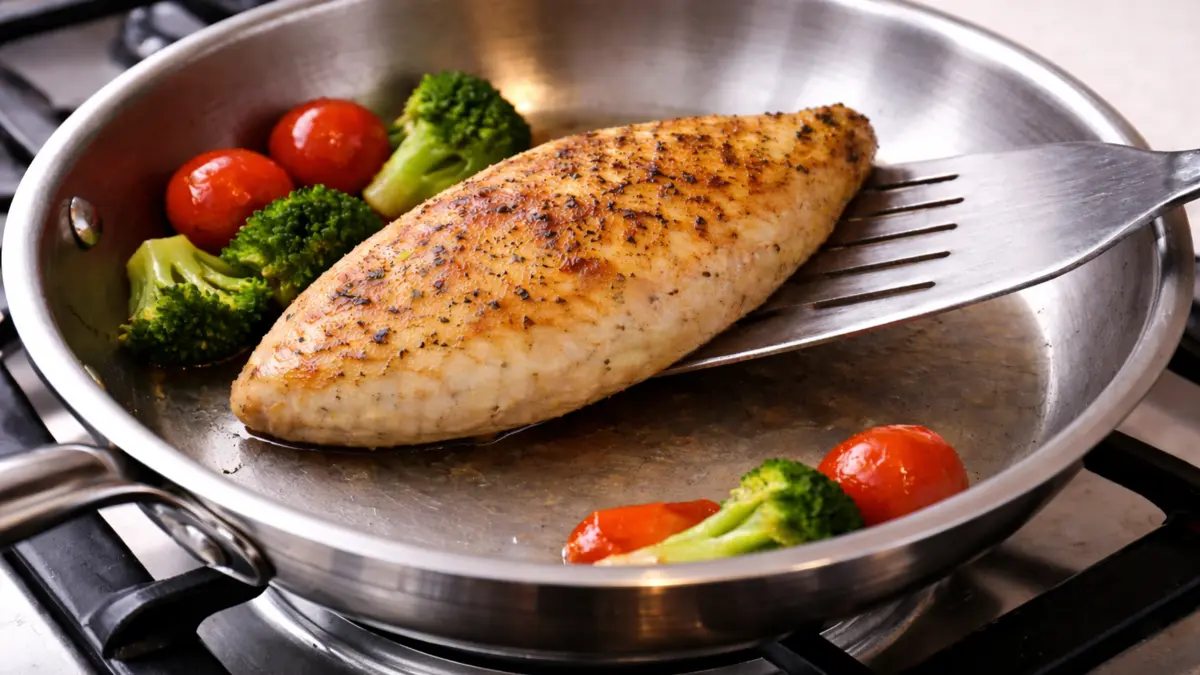
This is where most people go wrong.
When food hits the pan:
- It will naturally stick at first
- As it sears, it will release on its own
If it doesn’t release easily, it’s not ready to flip.
Let it develop a proper crust before touching it.
Add Liquid for Lean Meats
When cooking chicken breast or pork:
- Add a small splash of water or broth
- This creates steam
- Steam reduces sticking
Use sparingly — don’t boil the food.
5. Deglaze the Pan (Bonus Technique)
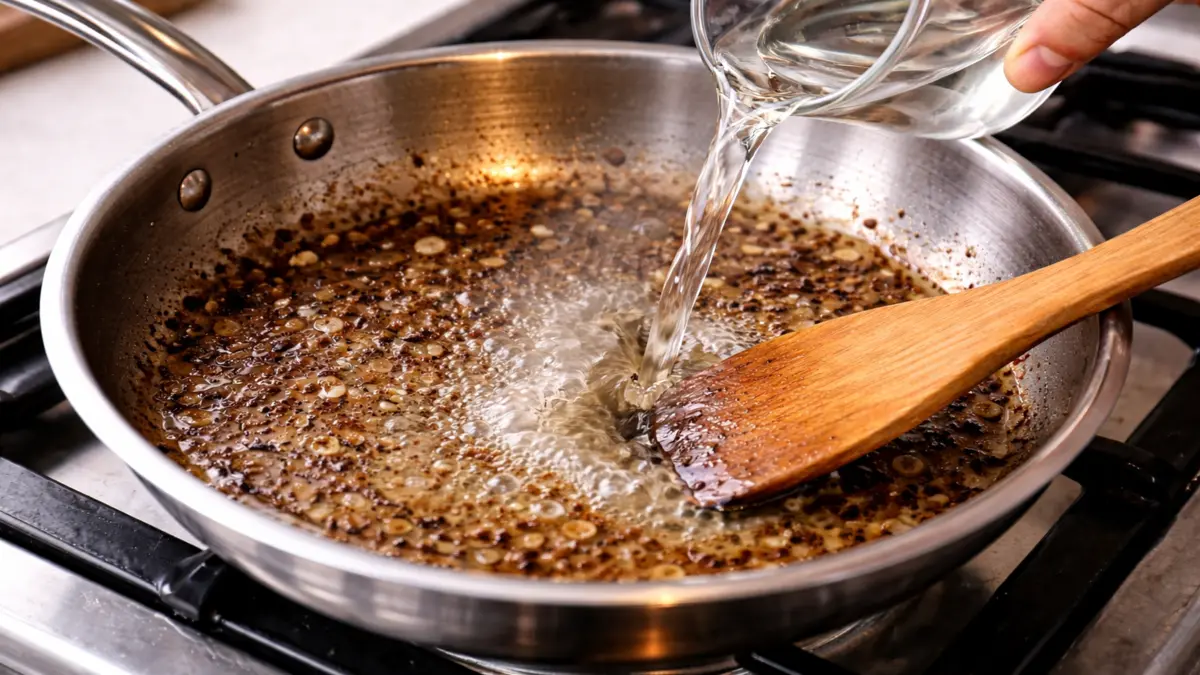
If food sticks slightly:
- Remove the cooked food.
- Add a splash of:
- Water
- Broth
- Scrape the bottom gently with a wooden spoon.
This loosens flavorful browned bits and prevents burning.
Bonus: You just made a sauce.
6. Use Parchment or Foil (Optional Method)
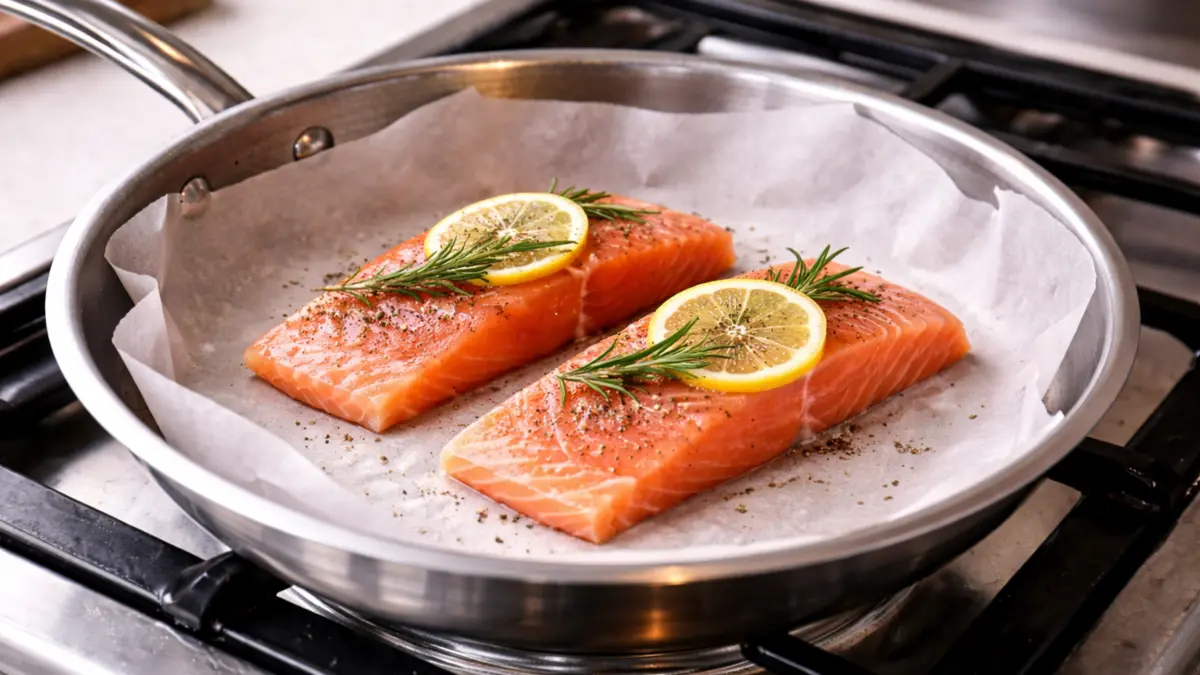
For delicate or sticky foods:
Parchment Paper
- Cut to fit the pan
- Place under food
- Creates a nonstick barrier
Foil Packets
Great for:
- Fish
- Vegetables
- Delicate proteins
Seals in moisture and prevents sticking.
7. Season the Pan Before Cooking
A simple salt trick:
- Sprinkle a small amount of salt in a heated dry pan.
- Let it sit briefly.
- Wipe out excess before adding oil.
Salt absorbs moisture and helps reduce sticking.
You can also use seasoning sprays designed for stainless steel cookware.
8. Adjust the Heat If Food Sticks
If sticking occurs:
- Lower the heat slightly
- Allow food to release naturally
- Avoid scraping aggressively
A heat diffuser can also help distribute heat evenly and reduce hot spots.
What Is a Heat Diffuser?
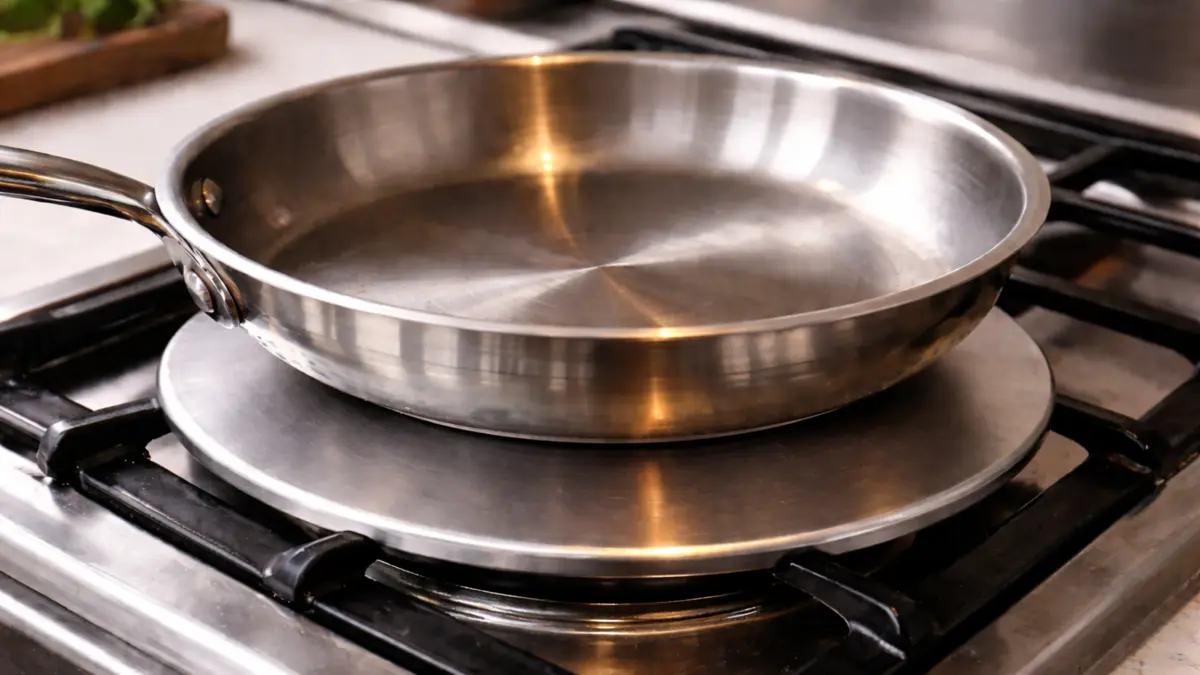
A heat diffuser is a flat metal plate placed between the burner and the pan. It distributes heat evenly and prevents hot spots that cause food to stick or burn.
Using a diffuser helps:
- Stabilize temperature
- Reduce scorching
- Improve heat control on gas stoves
The same principle of controlled, indirect heat is also used when baking dishes like creamy chicken pizza cooked in a pan without an oven to prevent burning at the base.
9. Clean Your Pan Properly
Burned residue increases sticking next time.
After cooking:
- Let the pan cool slightly
- Add warm water to loosen residue
- Use a soft sponge (avoid steel wool unless necessary)
For stubborn bits:
- Simmer water in the pan for a few minutes
- Then clean gently
Clean pan = better release next time.
Quick Summary: How to Stop Food Sticking to Stainless Steel
✔ Preheat properly
✔ Add oil after heating
✔ Dry food before cooking
✔ Don’t flip too early
✔ Maintain steady heat
✔ Deglaze when needed
Master these steps, and stainless steel becomes one of the best cookware materials in your kitchen.
Final Thoughts
Stainless steel pans aren’t “nonstick” — they’re technique-sensitive.
Once you understand heat control and timing, you’ll get:
- Perfect sears
- Beautiful crusts
- Easy release
- Minimal cleanup
And no more aggressive scrubbing after dinner.
Stainless steel pans are not naturally non-stick — but when used correctly, they perform beautifully.
Master heat control, moisture control, and timing, and you’ll enjoy effortless cooking with zero sticking and zero frustration.
FAQs
Why does food stick to stainless steel pans?
Food sticks to stainless steel pans when the pan is not properly preheated, the surface is too dry, or the heat is too high. Proper preheating and adding oil at the right temperature help create a natural non-stick surface.
How do you test if a stainless steel pan is ready?
Use the water drop test. Sprinkle a few drops of water onto the heated pan. If the droplets form small beads and glide across the surface, the pan is ready for cooking.
Should I add oil before or after heating a stainless steel pan?
Always heat the pan first, then add oil. Adding oil after preheating helps create an even oil layer that prevents food from sticking.
What is the best oil for stainless steel pans?
Use oils with a high smoke point, such as canola oil, avocado oil, vegetable oil, or peanut oil. These oils tolerate higher heat without breaking down.
Can you cook eggs in a stainless steel pan without sticking?
Yes. Preheat the pan properly, add oil after heating, and cook eggs on medium heat. Do not move them too early—wait until they naturally release.
What is a heat diffuser and does it help prevent sticking?
A heat diffuser is a flat metal plate placed between the burner and the pan. It distributes heat evenly, prevents hot spots, and reduces food sticking.