
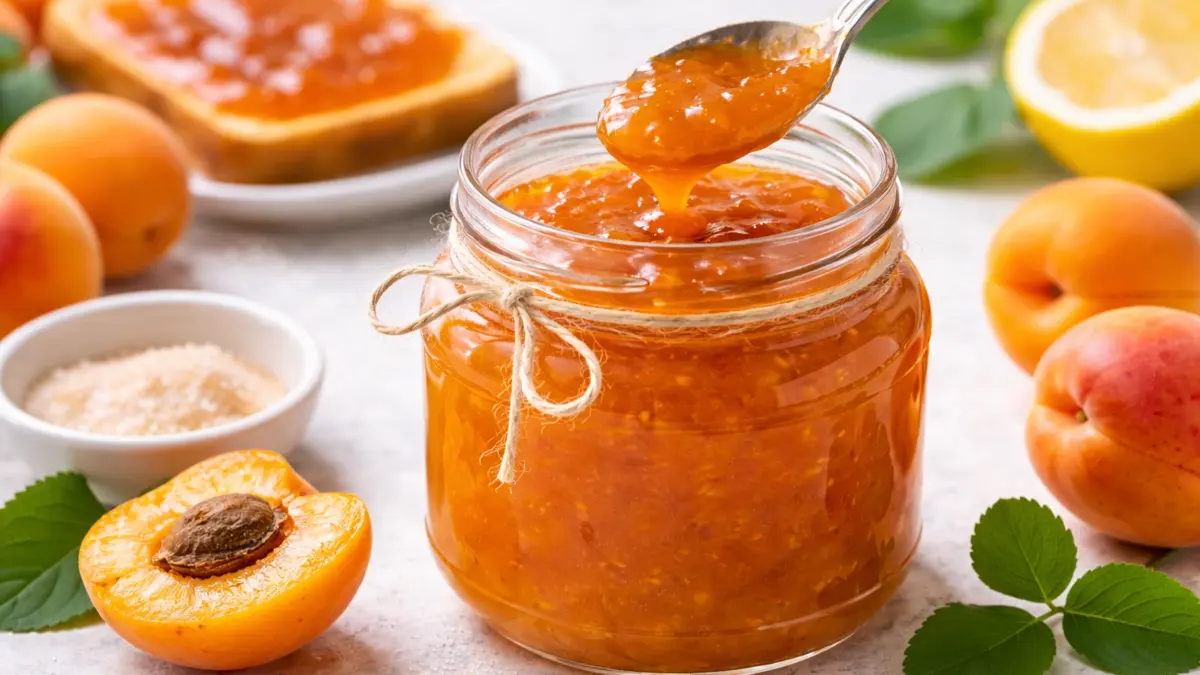
Getting the perfect jam consistency is the difference between jam that spreads beautifully and jam that stays runny—or turns overly thick and sticky. The good news is you don’t need special equipment to know when jam is ready. In this guide, you’ll learn the most reliable ways to check if your jam has set properly, plus quick fixes if it’s too runny or too thick.
If you’re making fruit preserves at home, try my Apricot Jam Recipe (No Pectin) for a simple, beginner-friendly example.
Why Jam Consistency Matters
A properly set jam should:
- Spread easily without being watery
- Hold its shape on toast (not drip)
- Look glossy and thick once cooled
- Have a smooth or slightly chunky texture (depending on your recipe)
Remember: jam thickens as it cools, so it’s better to stop cooking when it’s slightly looser than your final target.
What Makes Jam Set?
Jam sets due to the combination of:
- Natural pectin in fruit
- Sugar (helps bind with pectin and reduces water activity)
- Acidity (often from lemon juice)
- Heat + evaporation (reduces the liquid and concentrates the mixture)
If one of these is low—especially pectin, acidity, or evaporation—jam may remain runny.
The 3 Best Tests to Check Jam Setting
Use one of these tests, or combine two for confidence.
1) The Wrinkle Test (Plate Test)
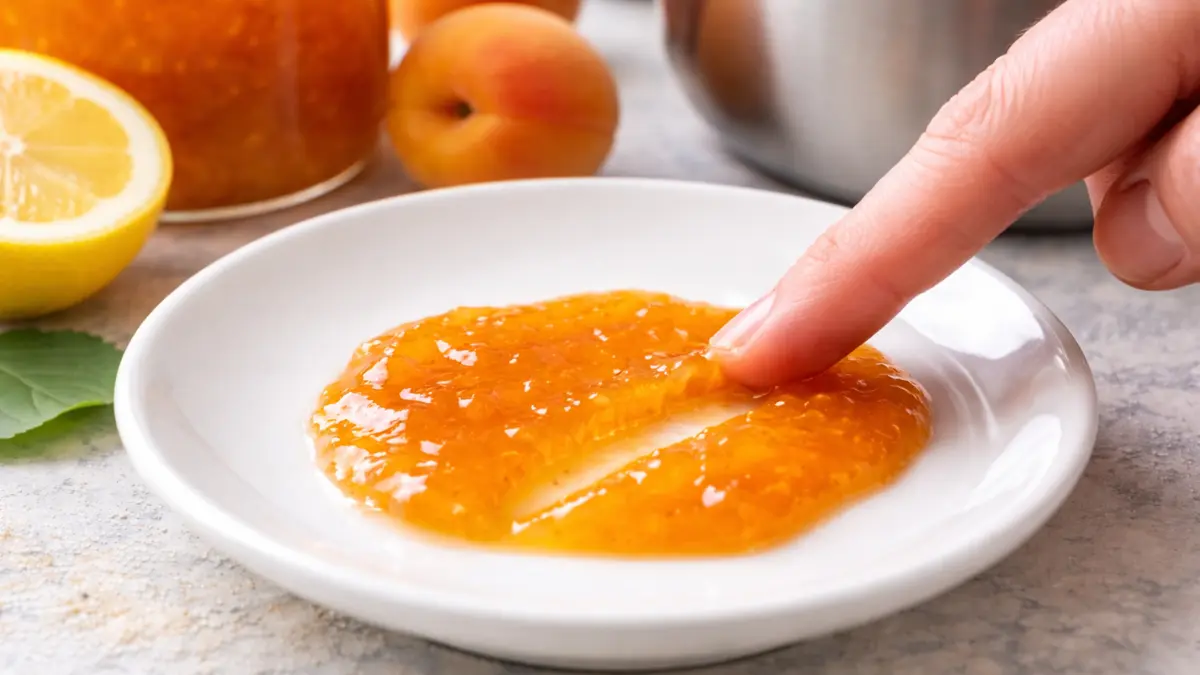
This is the most popular and reliable home method.
How to do it
- Place a small plate in the freezer for 5–10 minutes.
- Spoon a small amount of hot jam onto the cold plate.
- Wait 20–30 seconds for it to cool slightly.
- Push the jam gently with your finger.
How to read results
- Ready: The surface wrinkles and the jam holds the line you make.
- Not ready: The jam stays watery and flows back quickly.
I use this same wrinkle test in my Apricot Jam Recipe so the jam sets properly without becoming overcooked.
Common mistake
Testing on a warm plate gives false results. The plate must be cold.
2) The Spoon (Sheeting) Test
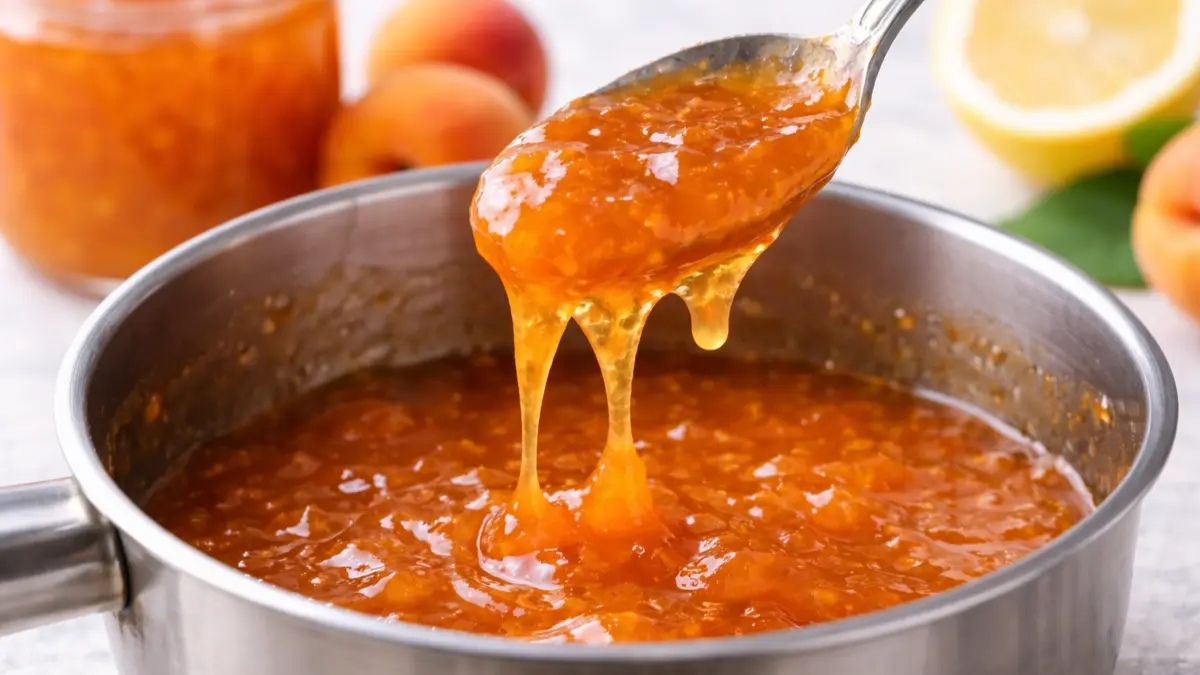
This test tells you if the jam has thickened enough to coat and fall in sheets.
How to do it
- Dip a clean spoon into the jam.
- Lift it and let the jam drip off the side.
How to read results
- Ready: Jam falls in slow sheets or thick drops that cling together.
- Not ready: Jam drips quickly like syrup or water.
Pro tip
Do this after the jam has boiled for a while and looks glossy.
3) The Temperature Test (Most Accurate)
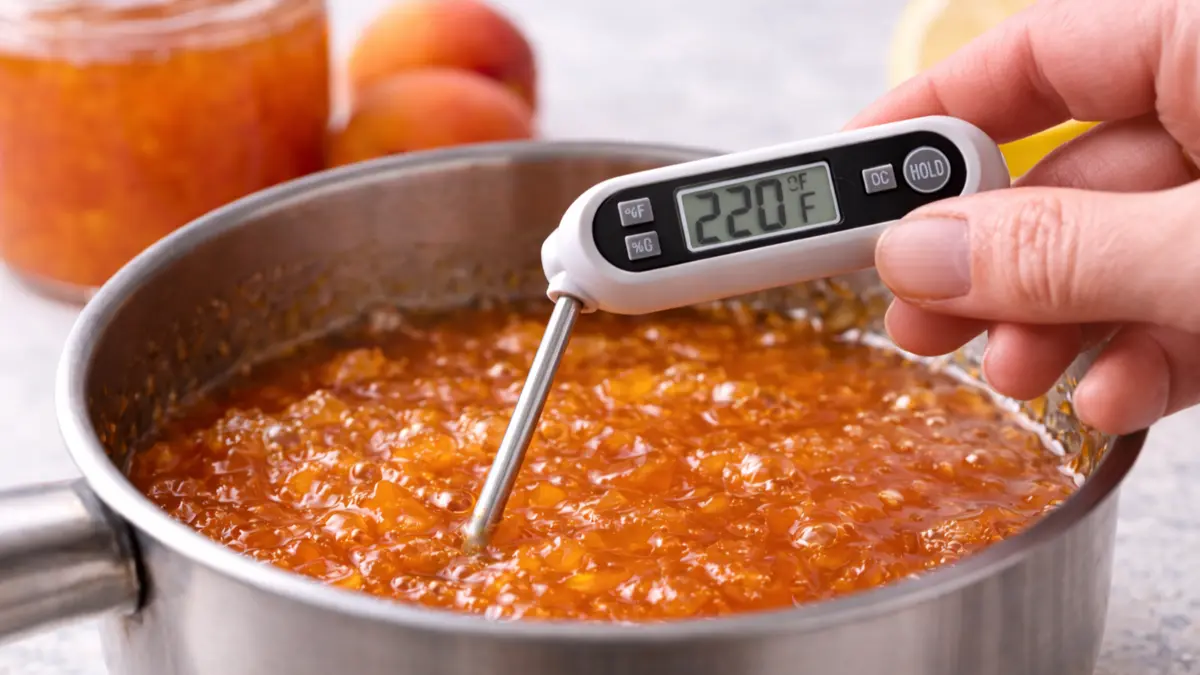
If you have a thermometer, this is the most precise method.
Target temperature
- 220°F (104°C) at sea level
At that point, the jam has reached the typical “setting stage.”
Altitude adjustment
At higher altitudes, water boils at a lower temperature; therefore, jam sets at a lower temperature as well.
A simple guideline:
- Reduce the target by about 2°F for every 1,000 feet above sea level.
(If you don’t know your altitude, use the wrinkle test instead.)
When to Start Testing
Start testing when:
- The jam looks glossy
- Bubbles become slower and thicker
- The mixture coats the spoon
- The fruit seems softened and broken down
Avoid testing too early—jam may still be in the “syrup stage.”
Signs You’re Close to the Perfect Set
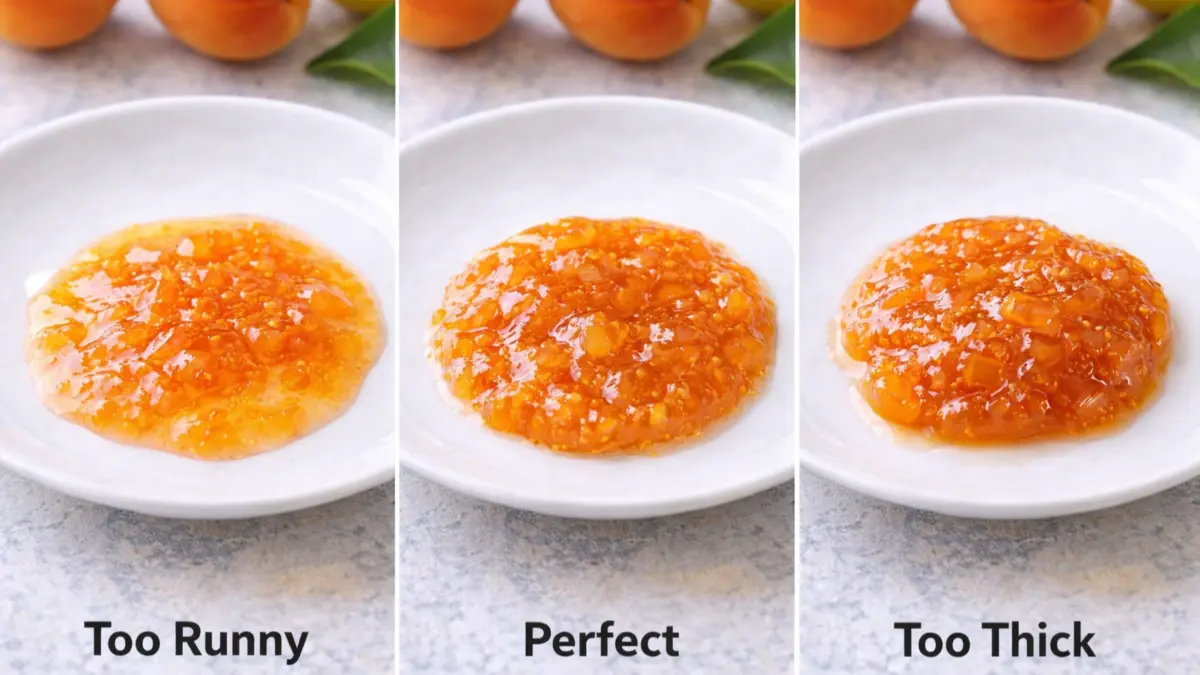
- The boil looks heavier and more “rolling”
- Jam thickens slightly when you stir
- A spoon dragged through the pot leaves a clear path for a second or two
- Drips fall slower and look sticky
Fixes: If Your Jam Is Too Runny
If your jam doesn’t set after cooling, don’t worry—this is common.
Quick fix (best method)
- Pour the jam back into the pot.
- Simmer gently until it thickens more.
- Add a small splash of lemon juice (optional) to support setting.
- Re-test using the wrinkle test.
This approach also works well for traditional preserves like my Lauki Ka Murabba Recipe, where the syrup thickens as it cooks and cools.
Why it happens
- Not cooked long enough (not enough evaporation)
- The fruit was very juicy or low in natural pectin
- Not enough acidity
Fixes: If Your Jam Is Too Thick
Overcooked jam can become sticky and hard to spread.
How to fix it
- Warm the jam gently on low heat.
- Add a small amount of hot water (or fruit juice) little by little.
- Stir until it loosens to a spreadable texture.
If you enjoy sweet preserves, you may also like my Gajar Ka Murabba Recipe, where getting the syrup consistency right makes all the difference.
Prevention tip
Stop cooking sooner and rely on the cooling-thickening effect.
Common Jam-Setting Mistakes to Avoid
- Cooking on very high heat the whole time (burning risk)
- Skipping lemon juice in low-acid fruits
- Not using a heavy-bottom pot (scorching affects flavor)
- Testing too early
- Overcooking to “make sure it sets” (results in thick jam)
Best Practices for Consistent Results
- Use ripe, flavorful fruit (but not spoiled or overly mushy)
- Keep stirring once thickening begins
- Use a wide pot for better evaporation
- Add lemon juice when the recipe includes it
- Test near the end, not throughout
Want more homemade recipes and traditional dishes? Browse my full Recipes collection.
FAQs
How do I know when the jam is set?
Jam is set when it wrinkles on a cold plate or falls off a spoon in slow sheets. A thermometer reading of around 220°F (104°C) is also a reliable sign.
What is the wrinkle test for jam?
The wrinkle test checks jam setting by placing a small spoonful of hot jam on a chilled plate. If it wrinkles when pushed with a finger, the jam is ready.
Does jam thicken as it cools?
Yes. Jam thickens significantly as it cools, so it’s best to stop cooking when it looks slightly looser than your final desired texture.
Why is my jam still runny after cooling?
Jam may stay runny if it wasn’t cooked long enough, the fruit was very watery, or the mixture lacked enough acidity. Re-simmering and retesting usually fixes it.
Can I fix the jam that didn’t set?
Yes. Return it to the pot and simmer gently until it thickens more, then test again using the wrinkle test or spoon test.