
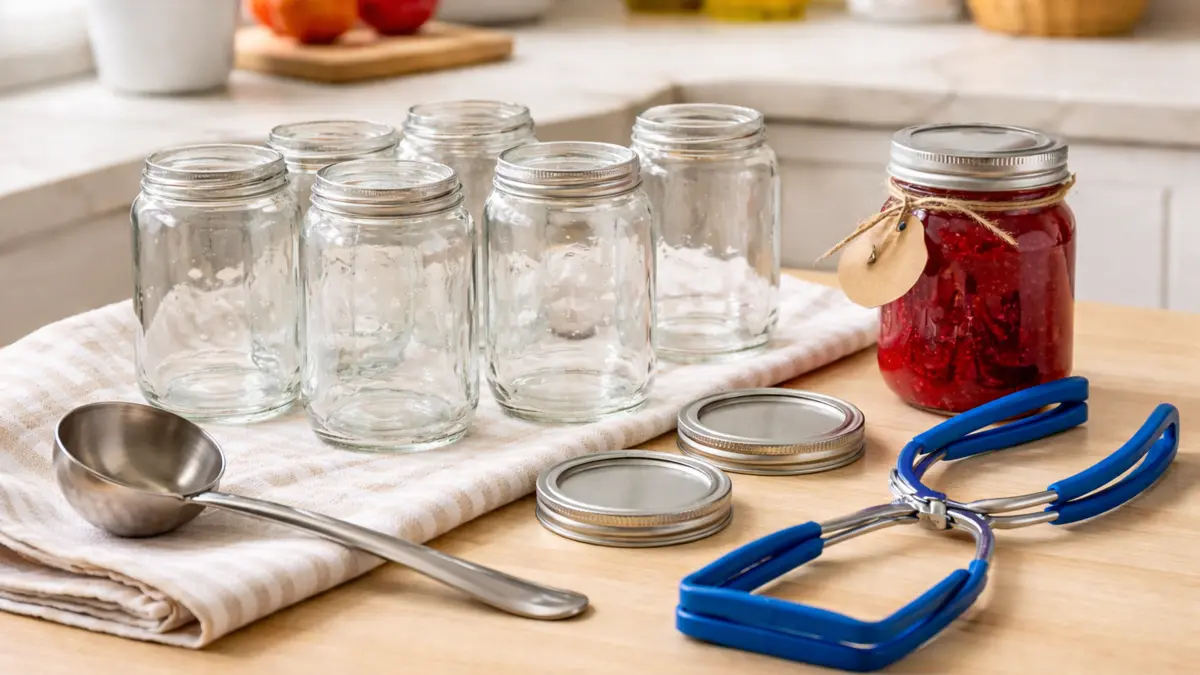
Sterilizing jars correctly is one of the most important steps in making homemade jam, murabba, and fruit preserves. Clean jars help prevent early spoilage, off smells, and mold—especially when you’re storing jam for more than a few days.
This guide covers the easiest ways to sterilize jars at home, plus simple storage rules that keep your preserves fresh and safe.
Why Sterilizing Jars Matters
Homemade jam is high in sugar, but contamination can still cause spoilage if jars or utensils are not clean. Sterilizing:
- Removes microbes that can spoil jam
- Helps the jam stay fresh longer
- Reduces the risk of mold growth
- Improves storage reliability
Even if you’re storing jam in the fridge, clean jars + clean handling make a big difference.
Proper jar sterilization is especially important when making homemade apricot jam, as clean jars help preserve flavor and prevent early spoilage.
What You Need
- Glass jars (with matching lids)
- Large pot or deep saucepan
- Tongs or a jar lifter (recommended)
- Clean kitchen towel
- Optional: oven or dishwasher
Before Sterilizing: Clean Everything Properly
- Wash jars and lids with hot, soapy water.
- Rinse thoroughly to remove soap residue.
- Inspect for cracks, chips, or rusted lids. Don’t use damaged jars.
Method 1: Boiling Water Sterilization (Most Reliable)
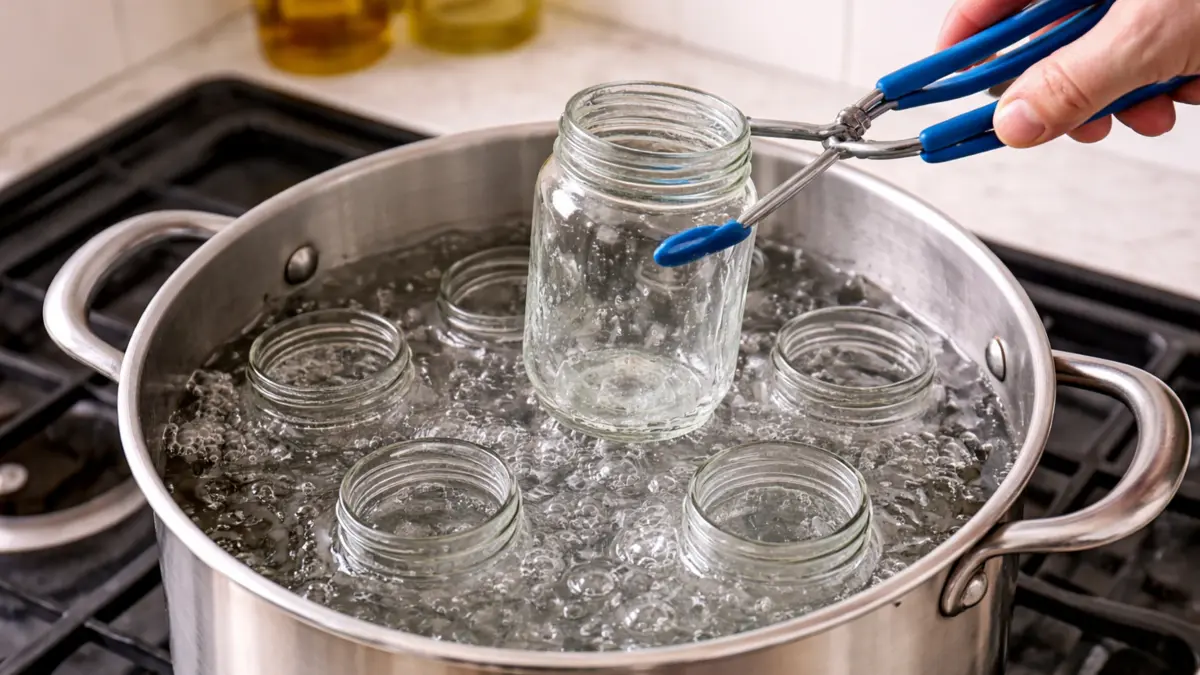
This is the easiest and most reliable method.
Steps
- Place jars upright in a large pot.
- Add water until jars are fully covered.
- Bring to a full boil and boil for 10 minutes.
- Turn off the heat. Keep jars in hot water until you’re ready to fill them.
- Remove carefully using tongs and place upside down on a clean towel.
Lids note
Some lids should not be boiled vigorously for long. A safe approach is:
- Wash lids well and pour boiling water over them, then keep them hot until use.
(Always follow the lid manufacturer’s guidance if available.)
Method 2: Dishwasher Sterilization (Convenient)
If your dishwasher has a hot wash / sanitize cycle, you can sterilize jars easily.
Steps
- Place jars on the rack, run the hottest cycle.
- Keep the dishwasher closed after the cycle so jars stay hot.
- Fill jars while they’re still warm.
This is great for small batches and regular jam-making.
Method 3: Oven Sterilization (For Jars Only)
Use this method for jars only, not for lids (many lids have seals that can be damaged by dry heat).
Steps
- Preheat oven to 120°C (250°F).
- Place clean jars upright on a tray.
- Heat for 15–20 minutes.
- Fill while warm, using caution.
The Golden Rule: Hot Jam + Warm Jars
For best results:
- Fill warm jars with hot jam (or warm jam as your recipe instructs)
- Avoid pouring hot jam into cold jars (can cause cracking)
Safe Filling and Sealing Tips
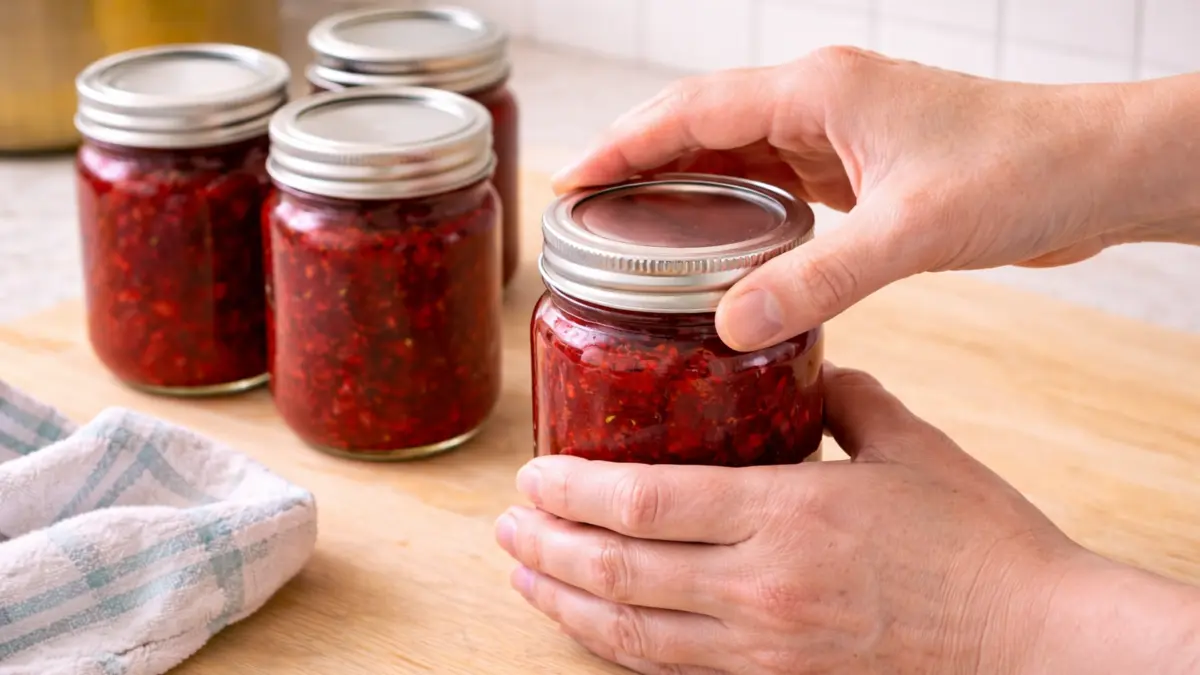
- Leave a little headspace (room at the top)
- Wipe the rim clean before sealing
- Close lids firmly (not overly tight)
- Let jars cool undisturbed on a towel
Once jars are sterilized, knowing how to tell when jam is properly set helps ensure the preserve stores well and doesn’t spoil.
Storage Rules for Homemade Jam and Preserves
Storage depends on how you preserve it. If you’re not doing full canning, keep it simple and safe:
Refrigerator Storage (Easiest & Safe)
- Let the jam cool, seal, and refrigerate
- Use within a few weeks for the best taste and freshness
- After opening, keep refrigerated and use within about a month
Pantry Storage (Only if properly sealed)
If you’re using a proper sealing method and jars seal correctly:
- Store in a cool, dry, dark place
- Avoid heat and sunlight
- Always check before using
(If you want long-term pantry storage, follow a full canning method.)
Traditional preserves like gajar ka murabba rely on proper jar sterilization to stay safe and shelf-stable without added preservatives.
Preventing Contamination After Opening
This is where many homemade jams spoil early.
Do this every time:
- Use a clean, dry spoon
- Don’t double-dip
- Close the lid immediately after serving
- Keep the jar refrigerated after opening
❌ Using a wet spoon is one of the fastest ways to introduce moisture and spoilage.
How to Tell If Jam Has Spoiled
Discard jam if you notice:
- Mold on the surface
- Off smell (fermented, sour, unusual)
- Bubbling or fizzing when it shouldn’t
- Strange color change or slime texture
When in doubt, throw it out.
FAQs
How do you sterilize jars for jam at home?
Wash jars, then boil them fully submerged for 10 minutes. Keep them hot until filling. Lids can be cleaned and kept hot using boiling water.
Can I make jam without sterilizing jars?
You can, but the jam is more likely to spoil early. Sterilizing jars improves safety and shelf life, even for refrigerator jam.
Why should I use a dry spoon for jam?
Moisture can introduce bacteria or mold and reduce shelf life. A clean, dry spoon helps keep jam fresh longer.
Should jam be stored in the fridge?
After opening, yes. If you are not using full canning, refrigeration is the safest method for homemade jam and preserves.